May 15, 2023

Exploring the Mysterious Mass Bird Suicides at Jatinga, Assam: Phenomenon, Theories, and Conservation Efforts

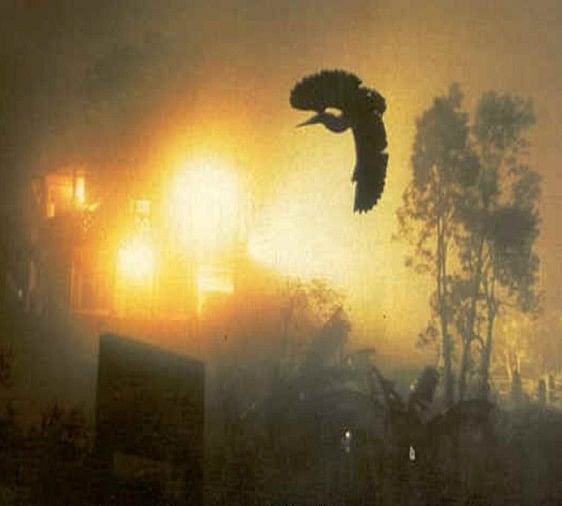
The "mass bird suicide" at Jatinga, Assam refers to a phenomenon in which several species of birds, mostly migratory ones, fly towards a certain village in the state of Assam in northeastern India during the monsoon season and end up crashing into buildings and trees, sometimes resulting in their deaths. This peculiar phenomenon has been observed in the village of Jatinga for over a century, and it occurs every year between August and November.


The phenomenon has been the subject of much speculation and folklore, with locals attributing it to supernatural forces or other mystical explanations. However, scientists and researchers who have studied the phenomenon have offered more rational explanations for it. Some have suggested that the birds are attracted to the village's bright lights during foggy or moonless nights, which can disorient them and cause them to fly towards the lights instead of following their usual migration routes. Others have suggested that the birds may be following each other in a mass panic, or that they are attracted to the insects that swarm around the village during the monsoon season.

Whatever the cause, the phenomenon has attracted the attention of scientists and bird enthusiasts from around the world, and Jatinga has become a popular destination for birdwatchers who come to observe the mass bird suicides. However, conservationists have raised concerns about the impact of human activity on the birds and their habitats, and have called for measures to protect the birds and their migration routes.


After the birds crash into buildings and trees in Jatinga, many of them die due to the impact. However, some of them may also be injured or stunned, and are unable to fly. The locals in Jatinga believe that the birds are possessed by evil spirits, and therefore, they catch and kill the birds for their meat or feathers.

However, in recent years, efforts have been made to prevent the killing of the birds, and instead, to rescue and rehabilitate them. Conservationists and wildlife authorities in Assam have set up bird rescue centers in Jatinga to provide medical care and rehabilitation for the injured birds. The rescued birds are treated for their injuries, and once they have recovered, they are released back into the wild.

It is important to note that the mass bird suicide phenomenon at Jatinga is not a natural behavior for these migratory birds, and it is believed to be caused by a variety of factors, including the bright lights of the village, weather conditions, and other environmental factors. Therefore, efforts are being made to better understand this phenomenon and to mitigate the impact of human activities on the birds and their habitats.

While the mass bird suicide phenomenon at Jatinga is certainly a cause for concern and warrants further study, it is not likely to have a significant impact on the overall population of migratory birds in the long term. However, it is important for local communities and authorities to work together to ensure that these birds are protected and that their habitats are conserved for future generations.

There are several factors that are thought to contribute to this phenomenon and make it unique to Jatinga, including:

Weather conditions: Jatinga is located in a region that experiences heavy monsoon rains and fog during the months of August to November. This weather pattern can create conditions that are conducive to bird disorientation, which may cause them to fly towards the bright lights of the village.


Geographic location: Jatinga is situated on a hilltop that is surrounded by dense forests and valleys. This topography may act as a barrier for the birds, preventing them from finding their way out of the area and causing them to crash into buildings and trees.


Light pollution: Jatinga is known for its bright lights, which are used by the villagers to attract fish and other animals. These lights can also attract birds, which may become disoriented and end up crashing into buildings and trees.


Migration routes: Jatinga is located on a major migratory route for many bird species, which may contribute to the large number of birds that are observed during the phenomenon.

Overall, the unique combination of weather patterns, geography, and human activity in Jatinga may be responsible for the mass bird suicide phenomenon in this particular area, and it is not observed in other regions. While similar behaviors have been reported in other parts of the world, they are typically associated with different factors and are not identical to the phenomenon observed in Jatinga.


While there has been some research into the causes of the mass bird suicide phenomenon at Jatinga, there is still no definitive answer as to what causes the birds to behave in this way. While some of the factors that I mentioned earlier, such as weather patterns and light pollution, have been suggested as possible contributing factors, the exact mechanisms behind this behavior are still not fully understood.

Furthermore, there is ongoing debate among researchers as to whether the birds are actually committing suicide or whether there is some other explanation for their behavior, such as disorientation or exhaustion. Some experts believe that the birds may be attracted to the lights of the village and become disoriented, while others suggest that the birds may be exhausted after a long flight and simply crash into buildings and trees in the area.

Overall, while there has been some research into the causes of the mass bird suicide phenomenon at Jatinga, more studies are needed to fully understand this behaviour and its underlying causes.

May 8, 2023

Exploring Roopkund Lake: The Mysterious 'Skeleton Lake' in the Indian Himalayas

Mystery of Skeleton Lake in Himalayas.

There are many lakes in India and all of them have a long history around. Many natural have been the site of civilisation and that's how humans got an idea of making artificial lakes and make fresh settlements which later became cities as the population grew!

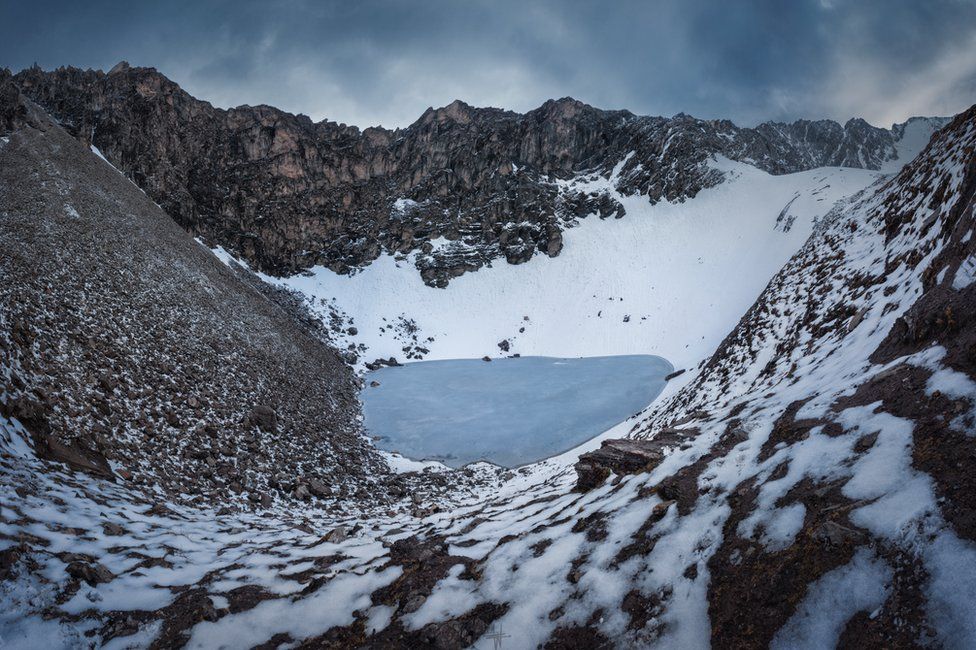
Most mysterious of all the lakes is Roopkund, also known as "Skeleton Lake" which is a glacial lake located in the Indian state of Uttarakhand, in the Himalayas. The lake is located at an altitude of 5,029 meters (16,499 feet) above sea level, and it is surrounded by snow-capped peaks.


The area around Roopkund Lake is known for its rugged terrain, high altitude, and stunning natural beauty. The lake is located in the Chamoli district of Uttarakhand, in the Nanda Devi Biosphere Reserve, which is a UNESCO World Heritage Site.

Roopkund Lake is known for the mysterious presence of hundreds of human skeletons that are visible at the bottom of the lake. The skeletons are believed to be from a time between the 12th and 15th centuries AD and are thought to be the remains of a group of travellers or pilgrims who died in a severe hailstorm.

Several scientific expeditions have been conducted to study the remains and gather more information about the people who perished there. Some theories suggest that the group may have been a royal entourage, or soldiers on a mission. However, the exact identity of the people and the circumstances of their deaths remain a mystery.


In recent years, Roopkund Lake has become a popular destination for trekkers and adventurers who are drawn to the lake's unique history and natural beauty. However, efforts are being made to preserve the site and limit the impact of tourism on the fragile ecosystem.

Since the discovery of the skeletions in 1940,the mystery of the Roopkund Lake skeletons has fascinated researchers, historians, and adventure enthusiasts for more than 70 decades now. Despite numerous investigations and expeditions, many questions about the identity of the people who died there and the circumstances of their deaths remain unanswered.

There are several reasons why the mystery of Roopkund Lake remains unsolved. One reason is that the remains are scattered and disarticulated, which makes it difficult to determine the number of individuals who died and the cause of death. The remains are also heavily fragmented, making it challenging to conduct DNA analysis or other forms of forensic examination.


Additionally, the remote location and harsh terrain around the lake have made it difficult for researchers to conduct extensive investigations. The area is only accessible during a brief window in the summer months when the snow melts and ice of the lake thaws, the region is prone to severe weather conditions and natural disasters such as avalanches.

Furthermore, the remains are believed to be several centuries old, which makes it challenging to piece together the historical and cultural context in which the deaths occurred. The absence of written records or historical accounts further complicates the investigation.

Overall, the mystery of Roopkund Lake is a complex and challenging one, and solving it will require a multidisciplinary approach that combines scientific investigation, historical research, and cultural analysis.

What are your thoughts on it? Have you heard about this lake before?


May 5, 2023

UFO Base in India - The Kongka La Pass


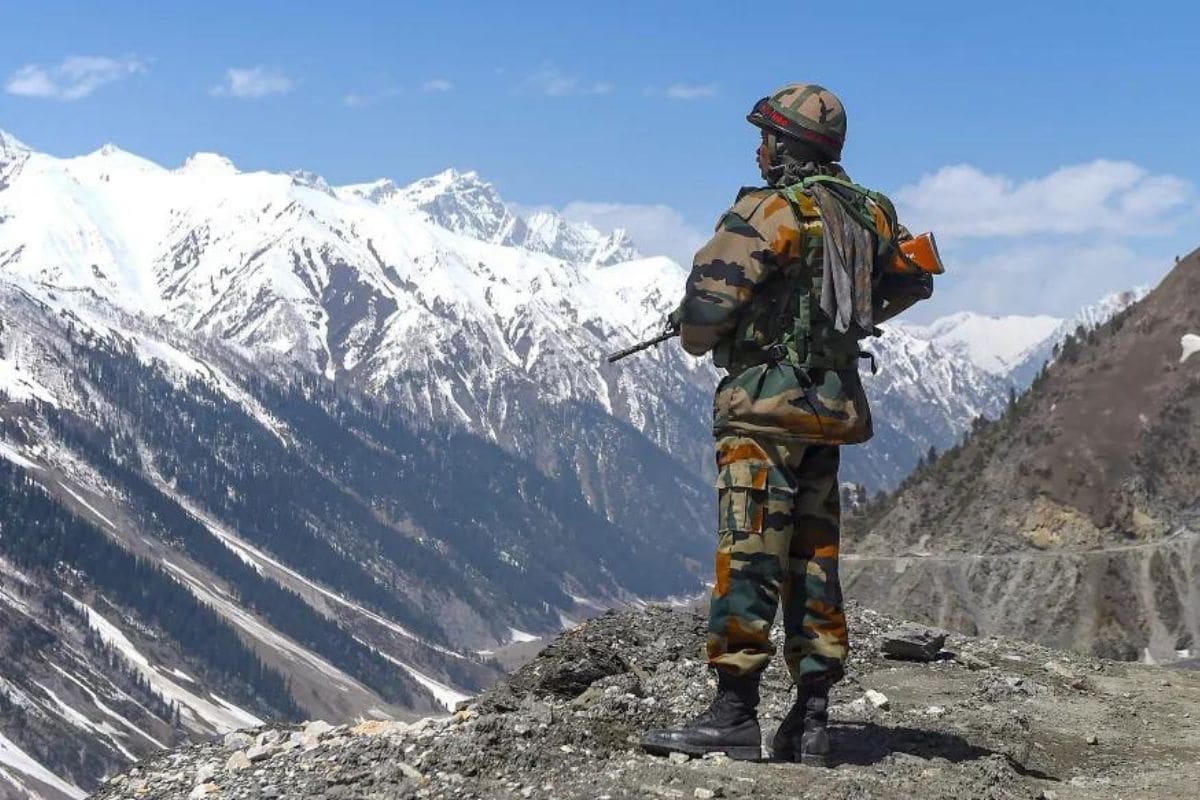
Kongka La is the low ridge pass in the Himalayas. It is in the disputed India-China border area in Ladakh. It is on the border between India and China With an altitude of 5171 metres above sea level.
The Chinese held northeastern part is known as Aksai Chin and Indian South West is known as Ladakh.


This is the area where Indian and Chinese armies fought major war in 1962.

The area is one of the least accessed areas in the world and by agreement the two countries do not patrol this part of the border.

The Kongka La Pass UFO Base is a rumoured secret underground facility located in the region . According to the rumor, the base is operated jointly by the Chinese and Indian military, and is used for UFO research and to house recovered alien technology.
According to many tourists, Buddhist monks and the local people of Ladakh, the Indian Army and the Chinese Military maintain the line of control. But there is something much more serious happening in this area. Reports of frequent UFO sightings in the area have become commonplace among locals.

For people residing around that area seeing UFOs have become an unvarying thing. No Tourist has avouch on seeing anything like that but people do travel from around the world to experience the visibility of a UFO.


The story of the Kongka La Pass UFO Base has gained some traction in conspiracy theory circles, but there is no concrete evidence to support its existence. While it is true that the Kongka La Pass is a remote and heavily militarised area, it is also subject to intense surveillance and patrols by both the Indian and Chinese military.

In addition, there are many reasons to doubt the plausibility of the story. The idea of a joint operation of Chinese and Indian UFO research facility seems highly unlikely, given the long-standing border tensions and territorial disputes between the two countries.
Furthermore, claims about recovered alien technology are often unsupported by any verifiable evidence, and the idea of an advanced extraterrestrial civilisation secretly working with humans to develop technology strains credulity.


There are a lot of questions regarding this theory.
Is this a normal practise of Espionage to keep civilians at bay? what are the implications of a joint Indian-Chinese UFO research facility? How might this impact global geopolitics and the search for extraterrestrial life? Is any other country also involved? Do they work on the technology they got from UFO or is there anything deep rooted?


A lot of questions remain unanswered. No one knows if this is just a rumour or there is something more intense behind it.
Don't forget to share your thoughts!

The Mysterious Abandonment of Dhanushkodi, Tamil Nadu: Unraveling the Curse

Nestled at the southern tip of India, where the Bay of Bengal meets the Indian Ocean, lies a place of haunting beauty and eerie history - Dh...