Showing posts with label Rajasthan. Show all posts

Jul 28, 2023

Unveiling the Enigmatic Treasure of Jaigarh Fort

Nestled amidst the rugged Aravalli Hills in Jaipur, India, the majestic Jaigarh Fort stands tall as a testament to the valor and architectural brilliance of the past. Built in 1726 by Maharaja Jai Singh II, the fort served as a crucial defense bastion and housed a treasure that has intrigued historians, treasure hunters, and enthusiasts alike for centuries. The hidden riches of Jaigarh Fort have become the stuff of legends, weaving tales of unimaginable wealth and grandeur. In this blog, we embark on a journey to unravel the enigmatic treasure of Jaigarh Fort and explore the mysteries that surround it.
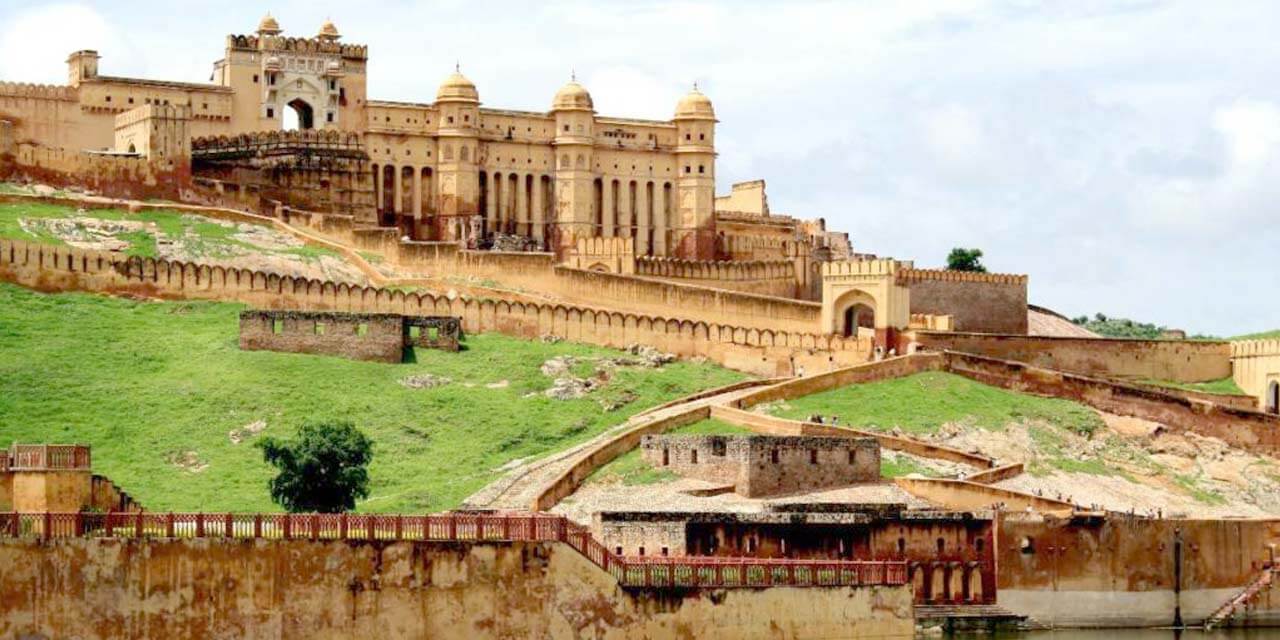

Jaigarh Fort, often known as the "Fort of Victory," offers a breathtaking view of Jaipur city from its elevated position. The fort's robust architecture and strategic location made it an impregnable stronghold during its time. Connected to the iconic Amer Fort by a subterranean passage, Jaigarh Fort stands as a symbol of Jaipur's rich historical heritage.

The most intriguing aspect of Jaigarh Fort is the captivating legend of its hidden treasure. According to local folklore, the fort houses immense wealth, including gold, silver, precious gems, and valuable artifacts, supposedly accumulated by the Kachwaha rulers. It is believed that the treasure was hidden deep within the fort's confines to protect it from invaders and marauders.

One of the most fascinating features of Jaigarh Fort is the mysterious "Red Door" or "Loha Pol." This door guards the entrance to the fort's inner chambers where the treasure is rumored to be concealed. The door has remained unopened for centuries, and attempts to unlock its secrets have yielded no success, further fueling the allure of the hidden wealth.

Over the years, numerous treasure hunters and explorers have tried to uncover the secrets of Jaigarh Fort's hidden riches. Some adventurers even claim to have heard the clinking of metal within the fort's walls, spurring further excitement and curiosity. However, due to the fort's historical significance and cultural importance, excavations and extensive search missions have been restricted.


Beyond the legends of treasure, Jaigarh Fort played an essential role in shaping the history of Rajasthan. It served as a vital military base and was a repository of royal arms, ammunition, and defense equipment. The fort's vast water storage systems and grand palaces are also a testament to the engineering prowess of the time.

The Treasure of Jaigarh Fort remains one of history's most enduring enigmas, adding to the allure of this magnificent fortress. Whether the legends of hidden wealth are true or simply a product of imagination, the fort's historical and architectural significance is undeniable. Jaigarh Fort continues to stand tall, not only as a historical treasure trove but also as a symbol of Rajasthan's valor and regal heritage.

As we marvel at the grandeur of Jaigarh Fort and the allure of its hidden riches, let us remember that the true treasure lies in the preservation and appreciation of our rich cultural heritage for generations to come. So, the next time you visit Jaipur, make sure to explore the captivating mysteries of Jaigarh Fort and immerse yourself in the timeless tales of the past.

Jun 5, 2023

The Unique Tale of Ravana: A Community's Mourning Amidst a Nation's Festivity

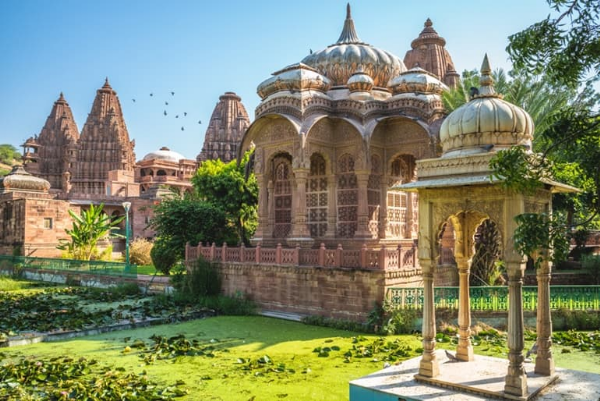
India, a land of diverse beliefs and customs, never ceases to surprise with its intriguing cultural tapestry. In the midst of nationwide celebrations where effigies of Ravana, the legendary king of Lanka, are set ablaze, a community in Jodhpur, Rajasthan, mourns his death. This community, known as the Shrimali Brahmin community, proudly considers themselves descendants of Ravana, with strong ties to the town of Mandore. Let's delve into the captivating story of this community and their unwavering reverence for the infamous ruler.

According to folklore, when Ravana journeyed to Mandore in Jodhpur to marry Mandodari, a group of Brahmins accompanied him in the grand procession. While Ravana returned to Lanka after the wedding, these Brahmins chose to remain in Jodhpur. Since then, the Shrimali Brahmins of the Godha gotra have been engaging in special worship dedicated to Ravana. Rather than witnessing the customary burning of effigies, they mourn his death on the day of Dussehra, known as Ravan's Shradh. Additionally, during the Shraddha Paksha, rituals like Tarpan are performed to honor him.

The presence of Ravana's devotees in the Jodhpur district is shrouded in theories lacking concrete evidence. However, it is widely believed that Mandodari, Ravana's wife, is revered as one of the five Mahasaties in Hindu mythology. Mandore boasts a prominent landmark named "Chavri," a tall umbrella-like structure believed to be the sacred site of Ravana and Mandodari's wedding. It is this historical connection that draws many followers and descendants of Ravana to perceive Mandore as a safe haven for migration.

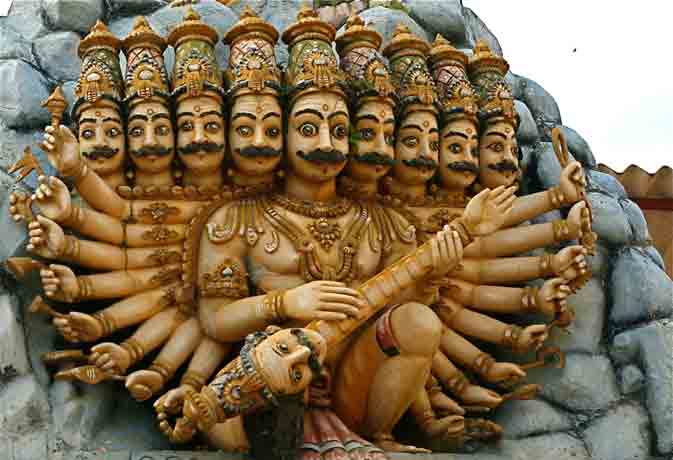
In 2008, the Brahmins of the Godha gotra constructed a temple dedicated to Ravana in the foothills of Mehrangarh, Jodhpur. Within this temple, a colossal statue of Ravana stands alongside idols of other deities, including Lord Shiva. This sacred space serves as a focal point for their worship.

Descendants and disciples of Ravana observe a 12-day mourning period known as sutak following Dussehra. During this time, separate rituals like shradh and Pinda Daan are performed to pay homage to the departed king. As a symbolic gesture of mourning, the descendants of Ravana change their clothes after bathing, just as the Yagyopaveet (sacred thread) is changed during traditional rituals. Notably, the Shrimali Brahmins of the Godha gotra, being descendants of Ravana, abstain from witnessing Ravana's effigy burning. Over 100 families of this gotra reside in Jodhpur, with an additional 60 families in Phalodi.

In addition to the mourning rituals after Dussehra, Ravana's shradh is performed annually on the 10th day of the 16 lunar days of "Pitra Paksh," which falls a month before Diwali. These observances uphold the traditions and customs passed down through generations within the Shrimali Brahmin community.

Remarkably, this sect of Brahmins chooses not to openly express their beliefs and religious sentiments in public. They refrain from comparing Ravana with other Hindu gods and goddesses to avoid causing offence or hurting religious sentiments. 
They consider Ravana their revered deity.


May 22, 2023

The Secrets of Bhangarh: Legends, History and Ancient Ruins

Bhangarh is a historical site located in Rajasthan, India. It was established as a fortified town in the 17th century. It was founded by Raja Madho Singh, who was a ruler of the Kachwaha Rajput dynasty and served as a general in the Mughal Empire under Emperor Akbar. The town was constructed between 1573 and 1583. Bhangarh had over 9,000 houses until 1720 after which it gradually diminished in population.

Bhangarh flourished for several years as a vibrant settlement until it was abandoned and fell into ruins for reasons that are not entirely clear. It is often associated with various legends and mysterious stories. One popular mystery revolves around a curse placed on the town, which is said to have led to its abandonment.

The town of Bhangarh did not collapse as a whole at any specific point in time. Rather, it gradually fell into ruins and was abandoned over the course of several years. The exact timeline of its decline is not well-documented, but it is believed to have occurred in the 18th century.


It is often associated with various legends and mysterious stories. One popular mystery revolves around a curse placed on the town, which is said to have led to its abandonment.

According to the legend, a sorcerer named Singhiya fell in love with the princess of Bhangarh, Ratnavati. He tried to use his dark magic to make her fall in love with him, but Ratnavati discovered his plan. In retaliation, she ordered for him to be killed. Before dying, Singhiya cursed the town, predicting its downfall and the death of all its residents.

There are various theories regarding the reasons for Bhangarh's abandonment, including war, natural disasters, and economic decline. However, no definitive historical records exist to confirm the specific factors that led to the decline of the town.

In addition to the curse of the sorcerer Singhiya, there are several other legends associated with Bhangarh. Here are a few notable ones:

The Black Magic Competition: According to one legend, a tantric (practitioner of occult rituals) named Guru Balu Nath lived near Bhangarh before the town was established. He permitted the construction of the town under one condition: The shadow of the town should never touch his meditating spot. If it did, the town would be destroyed. However, it is said that a prince or princess accidentally cast a shadow on the forbidden spot, resulting in the destruction of the town.

The Fortress of Shadows: Bhangarh is often referred to as the "Fortress of Shadows." It is believed that the town is haunted by the spirits of the cursed inhabitants who perished due to the curse. Locals and visitors claim to have experienced paranormal activities, strange sounds, and eerie occurrences within the ruins of Bhangarh.

The Mysterious Sadhus: There have been accounts of sadhus (holy men) who resided within Bhangarh and possessed supernatural powers. These sadhus allegedly meditated in the ruins and protected the town from evil spirits. Some believe that their presence added to the mystical aura and legends surrounding Bhangarh.

The Disappearing Town: It is said that Bhangarh vanishes during the night, and anyone who remains inside after sunset never returns. This legend further adds to the eerie reputation of the town.

It's important to note that Bhangarh is an abandoned ancient town, and its ruins are protected as a historical site. Therefore, the government's efforts have primarily been directed towards maintaining and conserving the existing structures rather than developing the surrounding area for habitation.
The Indian government, through the Archaeological Survey of India (ASI), has declared Bhangarh as a protected monument and has placed restrictions on entry into the site after sunset. These restrictions are primarily for the purpose of preserving the historical integrity of the site and ensuring its conservation.

The ASI considers Bhangarh as an important heritage site and acknowledges its historical significance. However, the government has not made any official statements or declarations regarding the alleged paranormal activities or the existence of curses in Bhangarh. These aspects are more part of local folklore and legends rather than official government positions.

There is no scientific or conclusive evidence to support the existence of paranormal activity in Bhangarh. Many people have visited the site, including researchers and paranormal enthusiasts, but no verifiable evidence has been produced to validate the claims of supernatural occurrences.

It is important to note that paranormal activity is a subjective and controversial topic. While some individuals may have personal experiences or believe in the existence of paranormal phenomena, it lacks scientific consensus and empirical evidence.

These legends have contributed to the mystique and allure of Bhangarh, attracting curious visitors and paranormal enthusiasts to explore its historical ruins and experience the aura of the place firsthand.

The government's main focus is on promoting Bhangarh as a historical and tourist attraction, encouraging visitors to appreciate its architectural beauty and cultural heritage.


The government's focus on Bhangarh has primarily been on preserving its historical significance and promoting it as a tourist destination. However, in terms of making the area around Bhangarh habitable, there is limited information available.

Today, Bhangarh is primarily a historical site with the remnants of its ancient structures, attracting tourists interested in exploring its architectural heritage and engaging with the legends and mysteries associated with the place.Another aspect of the mystery is the belief that no buildings constructed in Bhangarh can remain standing. It is said that whenever a roof is built, it collapses soon afterward. Consequently, the Archaeological Survey of India (ASI) has placed restrictions on entry into the town after sunset, declaring it a haunted site.

While the legends and tales surrounding Bhangarh have captured public fascination, there is no concrete evidence to support the existence of ghosts or paranormal activities in the area. The restrictions imposed by the ASI are primarily for the preservation of the historical site. Bhangarh continues to attract tourists who are intrigued by its mysterious reputation and the remnants of its ancient architecture.

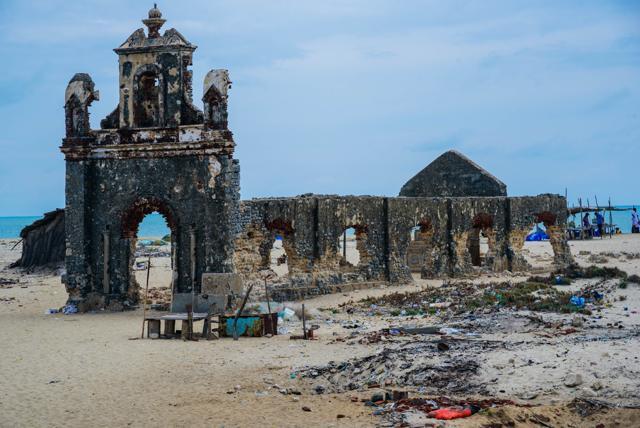
The Mysterious Abandonment of Dhanushkodi, Tamil Nadu: Unraveling the Curse

Nestled at the southern tip of India, where the Bay of Bengal meets the Indian Ocean, lies a place of haunting beauty and eerie history - Dh...